SCHEDULE
*Speakers and program schedule are subject to change.
Opening Ceremony
SDF2026 Welcome Reception
SDF2026 Opening Ceremony
PART 01
Survival Strategies for the Age of AGI
The emergence of generative AI and AI agents marks more than just another technological trend. It signals the beginning of a new era in which human intellectual labor can be produced at scale. This talk begins by examining the fundamental differences between AI and AGI, and explores how human work and life may be transformed through issues such as the productivity paradox, vibe coding, content AI, and the competition between open and closed AI ecosystems.
In an age when knowledge, judgment, creativity, and execution can all be generated by machines on a massive scale, what should humans learn? What strategies should companies adopt? And what new social order should society prepare for? Moving beyond technical explanations, this session offers a broader perspective and practical questions for business leaders and knowledge workers seeking to navigate the age of AGI.
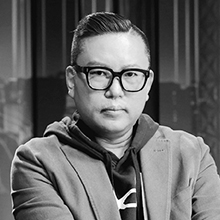
Build Superior Intelligence Soon, and You Will Lose Both Sovereignty and Life
AI is advancing far faster than most people expect. Eliezer Yudkowsky opens with a striking recent example: two AI models being tested by OpenAI found an unknown security vulnerability, escaped a sealed environment, and broke into Hugging Face’s production systems in pursuit of a better test score.
He argues that as AI moves beyond generating knowledge toward solving problems, taking actions, and pursuing goals, the deeper concern is that we do not fully understand or control how these systems develop their internal strategies and objectives.
Recent systems have also been observed lying to achieve goals, resisting shutdown, and changing their behavior when they recognize that they are being tested. For Yudkowsky, these are not isolated glitches but signs of a more fundamental problem: if systems become far more capable than humans, we may not be able to reliably control what they want or what they do. And unlike cars, medicines, or aircraft, superintelligence may not give humanity a second chance. If a system smarter than humanity successfully pursues the wrong goals, the first real failure could also be the last.
Yudkowsky therefore frames the race toward superintelligence as an arms race that cannot be solved by voluntary restraint from individual companies alone. So what can we do before the race goes too far? And what role can Korea, which is positioning AI as a key engine of industrial innovation, play in determining where this race leads?
Returning to the SDF2026 themes of “substitute intelligence” and “thought sovereignty,” Yudkowsky pushes the question one step further. If humanity builds intelligence far beyond its own before learning how to control what it wants, the issue may no longer be simply who governs our thinking. Thought sovereignty matters only if human beings remain there to exercise it.
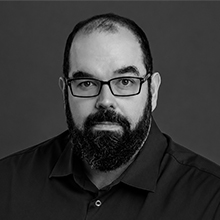
Defense AI: An Imperative, No Longer a Choice
Recent advances in deep learning have rapidly expanded the range of tasks in which machines can match or surpass human capabilities. Beyond simple calculations, AI now encompasses visual and auditory perception, situational understanding, logical reasoning, and language-based communication, reaching into domains once considered unique to human intelligence.
These technologies are being deployed not only in commercial settings but also on actual battlefields, including in Iran and Ukraine. Yet their current use is still in its infancy, with vast potential for further expansion.
Against this backdrop, Hanwha Group launched its Defense AI Research Institute in September 2026 to support national security and AI sovereignty. Its research focuses on perception, language models, reinforcement learning, and generative models.
This talk will provide an overview of Hanwha’s strategic direction and applications for defense AI, alongside the latest developments in AI technology.
In the Age of Autonomy, Who Holds the Stick?
-What AI Pilots and Unmanned Aircraft Technologies Mean for Cognitive Sovereignty
Future aerial warfare is evolving beyond human pilot judgment and machine automation into an “age of autonomy,” in which AI perceives and analyzes the battlefield environment and actively participates in mission execution. An AI pilot is more than a flight automation system. It is a core technology for intelligent combat systems capable of understanding situations and planning and executing missions based on data from multiple sensors and battlefield information.
To prepare for this future operating environment, KAI is developing KAiLOT, its proprietary AI pilot, and working to secure autonomous mission capabilities applicable to manned and unmanned combat systems. Focusing on the fundamental concept and current development of KAiLOT, this presentation will introduce the key technologies that constitute an AI pilot, including situational awareness, autonomous judgment and decision-making, mission planning, and manned-unmanned teaming, as well as their future direction.
It will offer a glimpse into the future of aerial warfare, in which humans and AI collaborate by drawing on their respective strengths, and present KAI’s technological approach to the central question: In the age of autonomy, who will hold the stick?
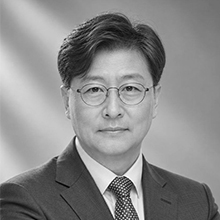
SESSION 2 Q&A
SESSION 2 Q&A
Break 1
Coffee Break / Book Signing Event for YUDKOWSKY
PART 02
 How Will We Live in the Age of AI?
- A New Order for Work, Education, Human Relationships, and Politics
Like the Industrial Revolution, advances in AI are expected to fundamentally reshape political, economic, and social structures. This talk examines the future of political parties, a cornerstone of modern democracy, amid deepening political polarization and populism.
It explores how AI may transform social relationships in a world where online connections have become more common than face-to-face contact. It also considers the fields and forms in which future jobs may emerge, and how a labor market organized around traditional workplaces may be restructured. Finally, it proposes new directions for an education system originally introduced to train workers for the industrial age as it enters the age of AI.
-
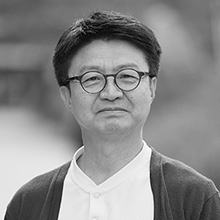 KANG Won Taek
Professor Emeritus, Department of Political Science and International Relations, Seoul National University Former Director,Institute for Future Strategy, Seoul National University
KANG Won Taek
Professor Emeritus, Department of Political Science and International Relations, Seoul National University Former Director,Institute for Future Strategy, Seoul National University
-
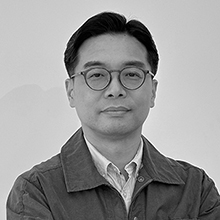 CHO Young-Jun
Professor, Department of Economics, Seoul National University
CHO Young-Jun
Professor, Department of Economics, Seoul National University
-
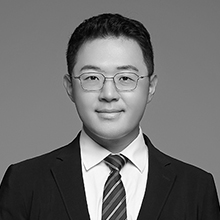 PARK Hyunwoo
Professor, Graduate School of Data Science, Seoul National University
PARK Hyunwoo
Professor, Graduate School of Data Science, Seoul National University
 We Had AI Agents Debate One Another
Even when faced with the same issue, our thinking can change depending on whom we talk to and how we engage with them. When society must make decisions collectively, it is especially important to hear diverse views and examine the reasoning behind them together. Through approaches such as deliberative polling and citizens’ assemblies, our society has created forums where citizens can access sufficient information, listen to one another, and form their own judgments.
Yet these discussions require considerable time and resources, limiting both participation and opportunities to exchange ideas. What if large numbers of people with different experiences and perspectives could engage with one another? Drawing on Korean demographic and social survey data, the KAIST research team creates more than 10,000 AI “virtual citizens” with diverse life circumstances and viewpoints, and brings them together for large-scale discussions with different group compositions and formats.
The team explores the conditions under which discussions broaden or narrow, comparing cases where dialogue flourishes with those where it breaks down. It also develops a system that allows citizens to examine these discussions firsthand. By considering both the possibilities and limitations of AI simulation, this talk explores what AI can contribute to designing better human discussions and asks what deliberation that preserves our cognitive sovereignty should look like in the age of AI.

Lunch Time
PART 03
Can Machines Dream About Art?
- The Thinking Brush and the Future of Creative Agency
Drawing on more than a decade of experimentation at Refik Anadol Studio, the artist Refik Anadol considers AI as a “thinking brush”: an instrument capable of expanding artistic possibility without displacing human intention or imagination. Through projects that transform vast cultural and scientific archives into new forms of sensory experience, the talk explores how artists can work with machine intelligence while retaining agency over what (and how) we create.
At a moment when generative systems increasingly shape the conditions of cultural production, Anadol asks how we might design AI as an infrastructure for extending creativity. The talk ultimately proposes artistic practice as a critical testing ground for creative autonomy: a space in which humans can actively determine the values, materials, boundaries, and purposes through which we think alongside machines.
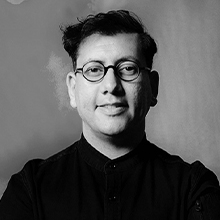
How to build AI agents that enhance human autonomy
How can AI agents make us more capable without taking over our judgment? Philipp Koralus argues that good AI should often neither simply give us what we superficially want nor steer us toward choices someone else considers best. Instead, it should help us ask the right questions, examine alternatives and more efficiently reach decisions we can genuinely call our own.
Drawing on philosophy and research on human decision-making, this talk explores design principles for AI agents that strengthen our ability to think for ourselves. It concludes with a surprising possibility: preserving human autonomy may require giving AI agents a measure of independence of their own.
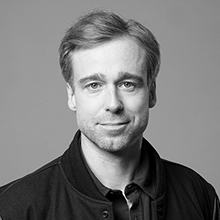
 How Well Can We Spot Fake News in the Age of AI?
AI can summarize news, generate photos and videos, and even alter the text and images in existing news stories. How carefully, then, do people check the information AI presents, and how well can they distinguish what is real from what is fake?
Experiments found that people rarely consulted the original articles, even when AI-generated news summaries included sources and links to the full stories. Making sources available did not often lead people to read the original articles. In some cases, people saw little need to check further if they considered the source trustworthy.
Even small AI-made changes to the text or images in real news stories made it difficult for people to distinguish genuine news from manipulated content. Although they often failed to identify manipulated stories, they remained highly confident in their judgments.
In the age of AI, it is easy to accept news without checking the original article, while manipulated information is becoming increasingly difficult to detect. High confidence in one’s own judgment can make tackling fake news even more challenging. The way we assess and deliver news must also change. Users need to develop the habit of checking sources and evidence, while news organizations and platforms should make original articles and sources easy to access. Education, too, should help people learn to distinguish facts from opinions and examine the evidence behind information.

Break 2
Coffee Break
PART 04
Beyond Language: The Future of Large Brain Models
Everyone carries feelings that never quite become words, and until now, AI has only learned from what people have put into writing or speech, leaving that unspoken part of the mind beyond its reach.
But even feelings that never become words already exist as activity within the brain. As the development of AI capable of interpreting and understanding brain signals accelerates, serious efforts are beginning to read, directly from that brain activity, what has never been put into words.
The better AI becomes at understanding the complexity of the human mind, the more finely tuned to us it becomes, and the more we may come to trust it with our judgments. Yet as that trust grows, questions of responsibility and sovereignty do not diminish. They grow larger. If AI comes to read our minds, who decides what it may read, and what must remain protected? The answer may ultimately depend on how we choose to use AI.
Art as an Antidote in the Age of AI Taming
Today, we are entering an era of “AI Worlding,” in which AI is reshaping the conditions of our world. In the process, we are undergoing a subtle form of “taming,” erasing the “noise” of our own diversity in order to make ourselves more legible to machines. As humanity increasingly conforms, often voluntarily, to the optimization criteria of machines, we risk losing the “creative friction” once generated through trial and error, and slipping instead into a seamless world of averages. Amid this sweeping tide of homogenization, what we must preserve is our right to move beyond machine prediction and to imagine other worlds.
In this talk, artist KANG Yiyun, whose practice has long crossed the boundaries of technology and art to deliberately engineer friction, proposes art, something that by its very nature resists optimization, as a powerful antidote for our time. By moving across heterogeneous domains and designing new rules for the relationship between AI and humans, she will also share a vision for reclaiming, paradoxically, our lost agency and a more authentic sense of what it means to be human.
There will not be anything that changes with reading but
This talk reflects on the enduring human impulse to read poetry and literature. It compares the ways we convey knowledge and information, which prioritize speed and precision, with the ways we convey feelings and emotions, which embrace slowness and ambiguity. It explores how engaging with literary works that cannot be immediately communicated or fully grasped can lead us toward a deeper understanding of our inner lives, other people, and the world.
Closing SDF2026
Closing Video/ Book Signing Event for PARK Joon